
Wine Selection Approaches for Novices
If you’re in the early stages of learning about wine, you’ll find there are wine selection approaches for novices like yourself when shopping at a local retailer.
We all begin our learning journeys, no matter the subject, as novices.
Fortunately, there are a few simple strategies that can make the selection process easier.
The best strategy is to shop at a store with knowledgeable staff available for consultation. You should not hesitate to ask. Staff are typically eager to assist.
There are two types of information that can be useful in seeking help with your search: your preferences and the occasion.
In terms of personal preferences, what types of wine have you enjoyed in the past? For example: type (red, white, rosé, or sparkling); body style (light to full, dry to sweet); varietal (grape); and price range. You can also specify that you prefer the wine to come from a particular country or region.
Knowing the occasion can also assist when seeking advice. As in, whether the wine is to be paired with food, enjoyed at a special occasion, or shared with family or friends.
Should you find your sales associate especially knowledgeable and attentive, feel free to ask follow-up questions. The encounter could be a good learning opportunity.
What to do if there isn’t a wine sales associate available?
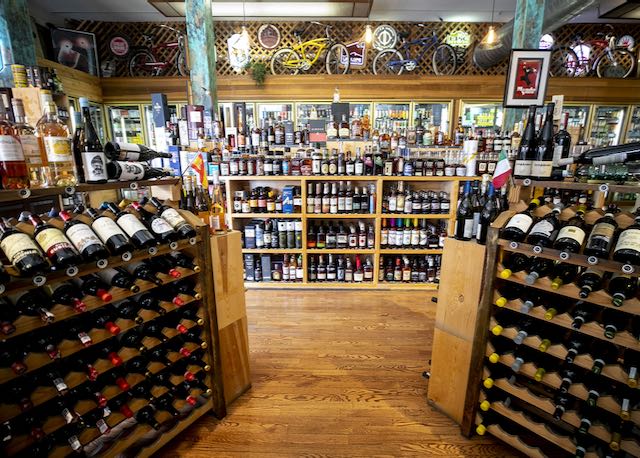
Begin your journey by perusing a store’s wine sections, which are typically organized by country and/or region. American wine from California normally provides the largest selection. These sections are organized by varietal, with choices such as Cabernet Sauvignon, Chardonnay, Pinot Noir, Sauvignon Blanc, Pinot Grigio, blends, and more.
Most varietals are made in specific styles, and matching the styles to your tastes can be part of your learning journey. As simplistic yet hopefully helpful examples, certain reds are made in more robust styles, such as Cabernet, Merlot, Zinfandel, and Syrah. Pinot Noir and many blends tend towards light to medium-bodied styles. White wines such as Chardonnay are fuller-bodied, while Sauvignon Blanc, Pinot Grigio, and Riesling range from medium to lighter-bodied.
While cost is understandably an important decision pivot, use the wine labels and prices to inform your decision.
Wine labels have tales to tell. There are usually front and rear labels.
On the front label, along with the winery and/or wine’s name, you’ll find the country, region, alcohol content (averaging 10 to 14 percent), and whether the wine is varietal or a blend (some of this information may be on the rear label). Many wines also state the vintage, the year the grapes were harvested.
The rear label may include producer and distributor information, but for your selection purposes, it may also contain information about the wine’s characteristics; a helpful tip to what’s inside.
For vintage wine, reds should be 1 to 5 years old. If older, you should be cautious and, if available, ask a sales associate for advice. Contrary to popular belief, red wine isn’t meant to age gracefully for years on end. For most white wines, acceptable aging ranges from 1 to 3 years. With rosés, you should be wary if they are three years or older. In most cases, rosés should present as fresh and vibrant, qualities they’ll lose if too old.
The age ranges advice doesn’t apply to all wine types, because some are intentionally made to be drunk at younger or older ages. As a “broad strokes” recommendation, an inexpensive wine should be of a more recent vintage. When working up the cost scale, greater vintage variability is acceptable.
The other item to note is how specific the label is to the region the wine is sourced from. For example, is it from a state, region, or a vineyard? The greater the specificity, the greater the potential for higher quality, and in turn, price.
You may notice when shopping for wine at your local wine shop that certain bottles are shelf or bottle tagged by a score on a 100-point scale (typically in the low 90s), and/or accompanied with the wine’s characteristics via a handwritten or preprinted note. Such tags are a marketing technique, but can still be helpful. A tag score ranking indicates peer recognition and potential quality. Usually, these scores result from being ranked by a professional wine organization or a recognized wine-tasting group. A written note will provide information you wouldn’t have otherwise about the wine’s characteristics.
In many European countries, where wines have been made for centuries, wine quality control parameters are established at several tiers by governing bodies that winemakers strive to meet. For example, in Italy, DOCQ is the highest quality standard. Then working downwards, you’ll find DOC, IGT, and VdT. The term “reserve” refers to a wine’s time spent aging in a barrel, an indication of potential quality.
The complexity of many of the European wine regulatory systems is best left to a more thorough examination.
Lastly, as a wine grower and maker myself, I can’t emphasize the importance of visiting and getting to know the small wineries in your area. They’ll teach you about their wines and personalize your experiences, and this, by itself, makes a difference in your knowledge, perception, and enjoyment of the wine!