

My New Winemaking Assistant Doesn’t Drink Wine
I’m deploying a new tool in my winemaking kit—but it isn’t replacing the experience, judgment, or curiosity that got me here.
AI is supplementing and strengthening my winemaking decisions and approaches.
Please don’t throw me on the trash heap of those living a fake life of brain-idled, shallow existence—yet.
Let’s backtrack for a minute, so I can show you my version of cred.
I caught the winemaking bug in 2008 after visiting a longtime friend in California, whose partner cared for a vineyard and made wine in the Sonoma Carneros American Viticultural Area (AVA).
In those early winemaking days, I had an easy-to-read, easy-to-follow winemaking book. While the book was useful, I primarily relied on a photocopied equipment and product list, along with step-by-step winemaking tasks, provided by the wine retail supply shop that also supplied the grapes from California.
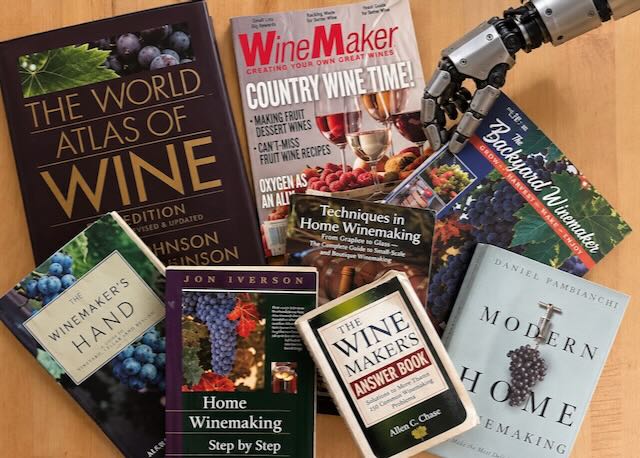
Evolving past rote guidance with several winemaking sessions behind me, I cultivated a library of books and reference materials that expanded my knowledge. I also avidly read and took advantage of the written resources provided by WineMaker Magazine, which is specifically geared toward hobbyists, smaller commercial winemakers, and growers.
Throughout my learning journey, I yearned to have control of the entirety of the winemaking process—from vine to wine, so to speak. To that end, I planted and began tending a small vineyard of 120 Pinot Noir and Riesling vines on a mesa at 5,900 feet elevation in western Colorado.
As a hobbyist, you can approach the winemaking process as simply or as technically as you desire. You—and probably your family and friends—are the only beneficiaries, or victims, of your efforts.
It comes down to your mindset, resources, effort, and time, which ultimately define the quality of the wine you create.
Over the years, I’ve matured my knowledge and approach to closely monitor the winemaking process. At each step, I track and assess numbers associated with sugar, acidity, pH, sulfur dioxide, and a few additional items as a developing wine might require. While I aspire to let an evolving wine work its magic with minimal intervention, there are times when interventions are necessary to keep a wine in balance and meet my goal of creating the best wine possible for the grapes and style I’m pursuing.
Crafting wine at this level of detail necessitates tests, charts and tables, and calculations during various stages of the process to know whether to add a pinch of this or a dash of that—and in what amounts.
To assist, I’ve collected hard-copy references in a notebook, created one-page cheat sheets, flagged pages in books, and created bookmarks in a browser. All provide quick access to the information and tools needed to make calculations and decisions.
Now, AI can do much of this work for me, in the form of OpenAI’s ChatGPT.
For my needs and current usage level, the platform is free and easy to use. The key to receiving seemingly accurate and relevant results is to frame questions completely, yet succinctly. This can include a simple inquiry about the amount of sulfite to add or asking for advice about when best to harvest grapes for making a certain style of wine.
As an experiment, I used AI exclusively for a Pinot Noir rosé I’m making this season. It began with exploring when to harvest, how to process the grapes to obtain clear-running juice, and which ingredients and amounts to add based on my test results.
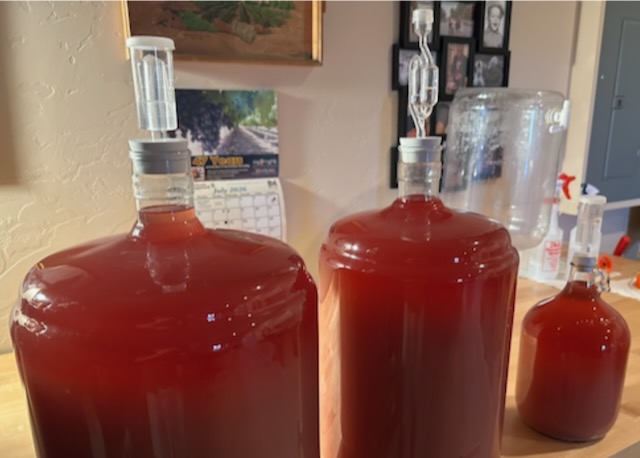
I found it interesting, if not outright helpful, to have the program perform calculations and recommend ingredient amounts. Further, it was useful that AI retained the history of decisions and actions taken with the wine. Having this information, it could make more relevant suggestions about what I should plan for—and what to be aware of—when new questions were posed.
Has this exercise decreased my judgement, analytical skills or decision-making capabilities?
I believe not.
Note my use of “seemingly accurate” when framing my AI usage above. While I used its calculations, I either referenced my own materials as a double-check or ran my internal “knowledge meter,” ensuring the recommendations were sound. Using AI also served as a “sounding board,” helping to confirm past winemaking experiences—and mistakes.
So, no. My knowledge and skills haven’t been tossed onto the trash heap. If anything, they’ve been given a new tool “with benefits”—and perhaps a little less paper to shuffle through.
And yes, I’ll always keep my hard-copy and digital reference materials at hand!