“It was the best of times, it was the worst of times.”
— Opening line from Charles Dickens’ A Tale of Two Cities (1859)
An Exercise of Extremes
That famous opening line aptly encapsulates this past winter and the spring in Colorado’s North Fork Valley.
The winter began innocently enough. While the vines quietly slumbered, December’s weather was reasonably normal. There were a couple of wet snow events here and there—nothing to get too exorcised about, except for a few days mid-month when snow chains were required to navigate my steep gravel driveway.
Let’s qualify that last sentence.
Exorcism may have been required—but not because of the snow. I was dealing with what was later diagnosed as pneumonia, which sidelined me for the remainder of December. Crawling around in the snow and mud several times to install tire chains undoubtedly aggravated the already developing illness.
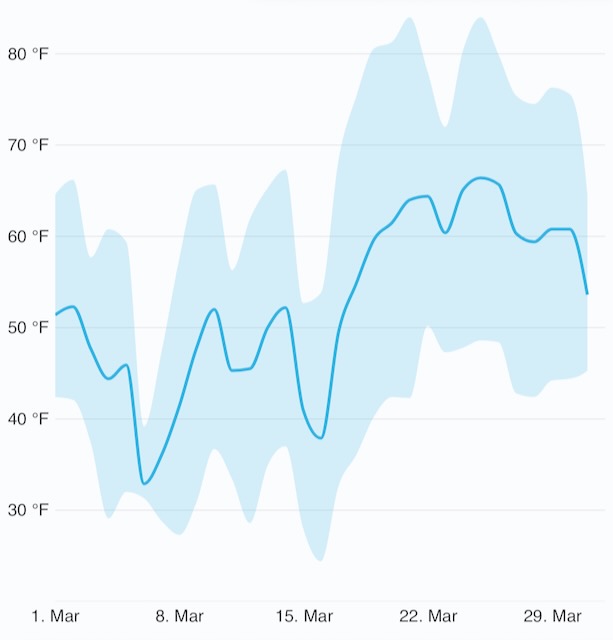
As winter progressed into the new year, temperatures were unseasonably mild while precipitation became increasingly scarce. March proved to be record-breaking warm. Within days of the spring equinox, a heat dome settled over the region.
March average temperatures
From March 19 through the end of the month, my vineyard weather station recorded five days exceeding 80°F. Two of those reached 84°F, and another seven days climbed into the 70s.
High temperatures of this consistency are virtually unprecedented for March. Records were broken across western Colorado and much of the broader Southwest.
To illustrate just how extraordinary the temperatures were in the first quarter of the year, the table below compares average temperatures “above the norm” for three periods: January through March (the first quarter), February through March, and March alone.
The comparison uses data from two weather stations: the Colorado State University Agricultural Extension station on Rogers Mesa in the North Fork Valley and my personal vineyard weather station on Sunshine Mesa.
I used the Rogers Mesa station for comparison because it provides a much longer historical baseline. The CSU station has maintained weather records for 27 years, while my station has accumulated six years of data.
The highlighted rows provides the difference between the average temperatures of 26 years of Rogers Mesa station through 2025, and the 2026 Sunshine Mesa data. Notice the steadily increasing departure from normal between the first quarter, February through March, and March alone. While all three periods illustrate significant warming, March stands apart.
Because of the March heat dome, daily average temperatures were consistently above 50°F—the generally accepted threshold at which soils begin warming enough to trigger grapevine budbreak, the emergence of new green shoots.
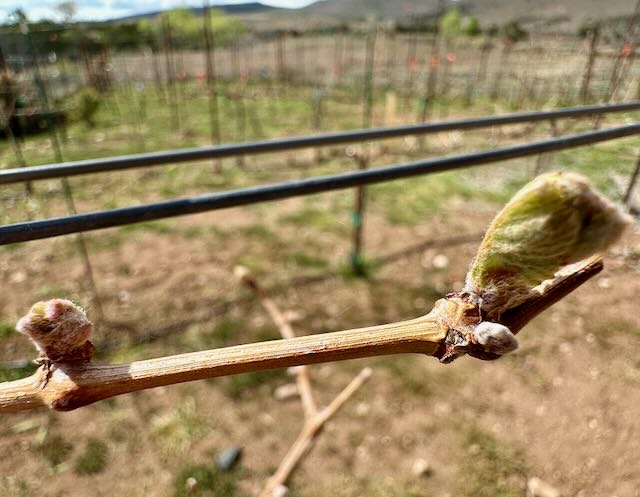
A handful of my vines answered nature’s call, something that typically doesn’t occur until early May.
Pinot Noir vine budbreak March 30
Freezing Temperature Impacts
In early April with an overnight freeze in the immediate forecast, The Colorado Sun published an article about an amino acid-based product designed to help protect fruit buds from freezing temperatures. A horticulturist in Palisade—Colorado’s largest fruit- and grape-growing region—had been researching and testing the product, which reportedly could protect buds at temperatures as low as 27°F.
Think of it as antifreeze for vine buds.
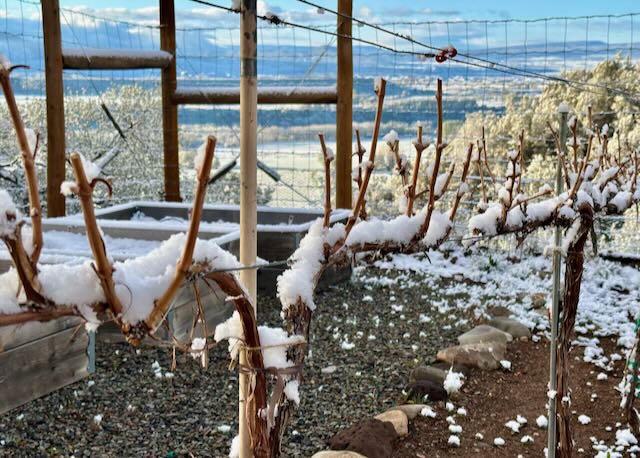
After conducting research, I located the product, called Metalosate, at a local agricultural supply company. By the end of that afternoon, every vine in my vineyard had been sprayed. Overnight temperatures fell to 29°F and 28°F on the following two nights. Later in the month, on April 18, an even deeper freeze swept through the valley.
The first freeze after the heat dome also brought fluffy snow, which may have provided bud protection
Fortunately, valley vineyards escaped with little or no damage because many grapevines had not yet experienced budbreak. Fruit growers were not nearly as fortunate. The April 18 freeze proved devastating. Cherry, peach, and apple trees had fully bloomed during the March heat wave, and virtually the entire fruit crop was lost.
An article published in the Grand Junction Daily Sentinel capture the challenges faced by a local valley vineyard and winery—The Storm Cellar, my neighbor on Sunshine Mesa. Another article published by The Colorado Sun, details the plight of valley orchards.
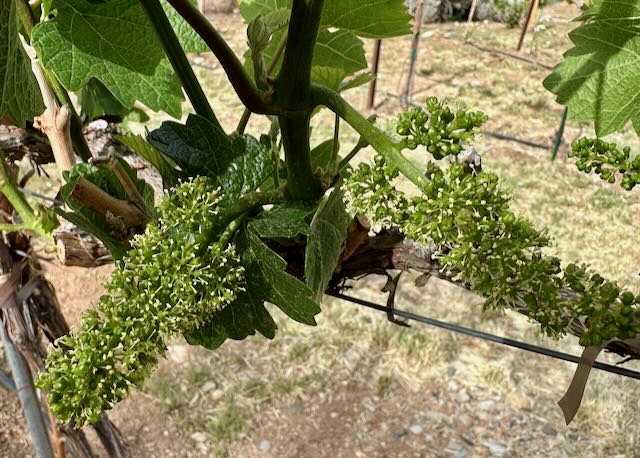
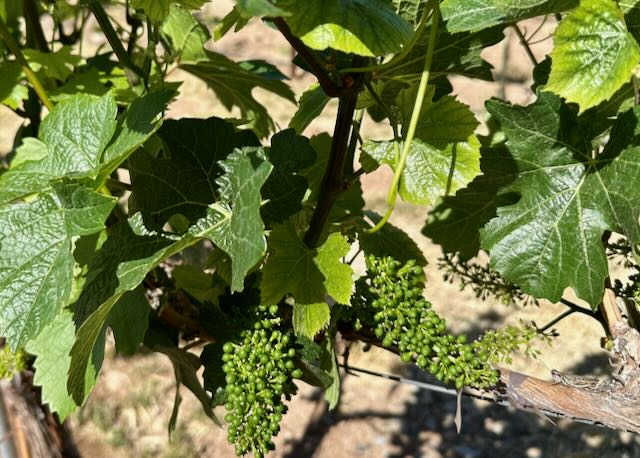
While it’s impossible to know whether the bud-protection spray fully protected my vines, I believe it had a positive effect. Flowering proceeded successfully in late May, and within two weeks an abundance of grape berry clusters had formed. The clusters did appear somewhat smaller than normal, suggesting that some primary buds may have sustained freeze damage.
A small price to pay for a turbulent spring that, at least for grape growing, could have been much worse.
Grape flowers
Grape berries
Another Spring Surprise
A growing season never seems complete without a new challenge.
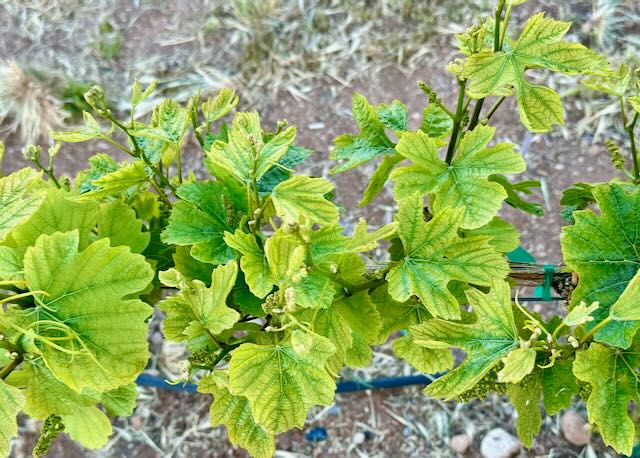
As the vines flowered in late May, I noticed unusual leaf growth in one quadrant of the vineyard. Many leaves became translucent, curled, or developed a fan-like shape. My initial research suggested chlorosis—a mineral deficiency, most likely caused by reduced iron uptake. My vineyard soil has a naturally high pH, which can limit the vines’ ability to utilize certain minerals.
The recommended treatment was a foliar mineral spray, which I applied immediately. After a week with no improvement, I forwarded photographs and a description of the problem to the viticulturist at the Colorado State University Rogers Mesa Extension Office.
One of the photos I provided to the CSU Extension office
The diagnosis surprised me.
The problem wasn’t a deficiency at all. It was herbicide drift, most likely originating from neighboring hay and alfalfa fields.
The affected vines were clustered in one section of the vineyard, making the diagnosis entirely plausible. And if there is one constant on Sunshine Mesa, it’s the wind.
There is no way to know the full extent of the damage. The remainder of this season—and perhaps next year’s as well—should reveal the long-term effects. Many of the affected vines had already developed grape clusters. I removed them so the vines could devote their energy to rebuilding healthy canopy growth rather than ripening fruit.
In hindsight, I can’t say enough about the invaluable role Colorado State University Extension offices play in supporting agriculture throughout the state. Their expertise is an essential resource for growers of every size.
Implementing a New Vineyard Floor Strategy
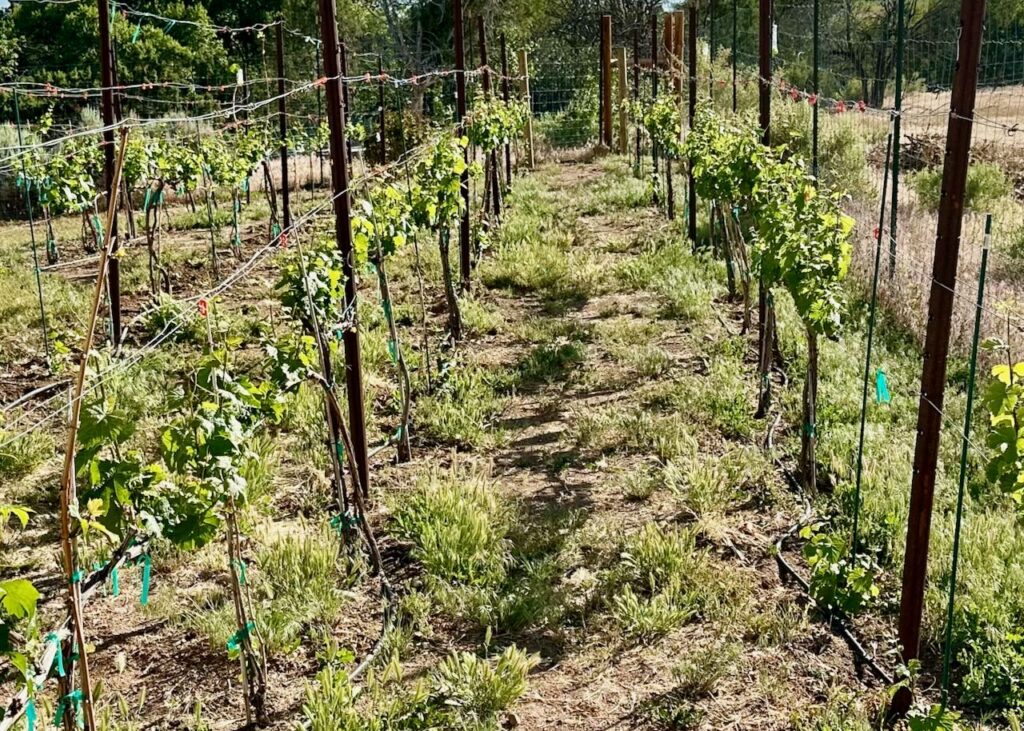
Since planting the vineyard six years ago, the vineyard floor has consisted of bare soil, and rocks. Every week or two, I’ve spent considerable time and muscle hoeing around approximately 120 vines to keep weeds and grasses under control.
This season, I decided to try a different approach that, over time, may establish a natural grass groundcover. Why? A groundcover improves soil health, moderates soil temperatures, and helps extend grape hang time before harvest.
Grass naturally seeded from adjacent field - May
Unfortunately, intentionally seeding and growing a traditional groundcover, especially during the first season, isn’t practical given the limited water available for irrigation.
Enter the weedwhacker.
In essence, I now weedwhack everything, allowing grasses to grow while selectively removing broadleaf weeds by hoeing or hand-pulling. If nature cooperates, the grasses should gradually spread throughout the vineyard.
After two months using this approach, I decided to hoe directly beneath and immediately around the vines to protect both the trunks and drip emitters from the spinning weedwhacker line.
So far, the strategy shows promise. Grasses have naturally spread into portions of the vineyard from the adjoining field. By July, much of the new grass had turned brown because June offered no meaningful precipitation. Monsoonal moisture later in the summer may revive the grass.
Another season or two should reveal whether this long-term approach is sustainable. As a grower friend of mine commonly relates, tending to a vineyard is a series of “wild and crazy experiments”!
Seasonal Realities
There is always something.
As May was exiting, my solar water pump hit the bricks. Captured in a Musing post, it took two weeks to repair as the cistern water level lowered to near deadpool.
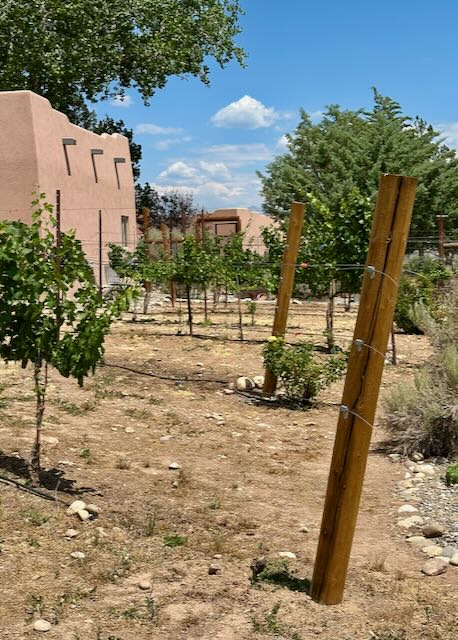
Although as June came to a close, the vineyard was in great shape. Pruning and preventive spraying for fungal diseases and insects had been completed on schedule. My active yellow jacket capture and kill program provided excellent returns. Eight new 5″ diameter treated wood posts were installed at the end of several vine rows, to better support the vine trellis.
Bottling five cases of Pinot Noir Rosé and a 50/50 field blend of Riesling and Gewürztraminer from the 2025 harvest also kept me busy. On the immediate horizon, 21 gallons of a Pinot Noir and Syrah blend were next up on the bottling line.
Meanwhile, wildfires erupted across much of Colorado.
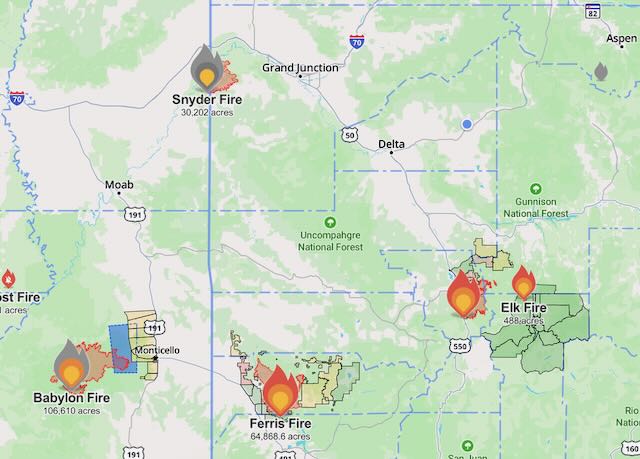
Wildfires in western Colorado in mid-July. Note the largest Babylon fire in southeastern Utah. The blue dot to the right of Delta corresponds with my vineyard. Courtesy of Watch Duty.
Unfortunately, this came as little surprise. Much of the state has been in drought for more than a year. The nearby Babylon Fire in southeastern Utah quickly grew into the largest wildfire in the United States. Persistent southwest winds carried dense smoke into the North Fork Valley for days.
One Sunday evening, air quality reached an astonishing 500—the highest value on the Air Quality Index.
After several consecutive days of hazardous air, it genuinely felt we were living through “the end of days.”
During the second week of July, however, the weather pattern shifted. Winds began arriving from a different direction, clearing the valley of smoke. By mid-July, weather models suggested the summer monsoon might arrive earlier than normal. Forecasters also indicated that moisture and accompanying severe weather could be intensified by the development of a Super El Niño.
Whatever is in store, bring it on.
The monsoon was a no-show last year. We’ve been stuck in a drought rut for nearly two years.
Every growing season presents its own unique challenges, and summer promises to be no exception. It’s what makes life worth living.
See you in the vineyard!
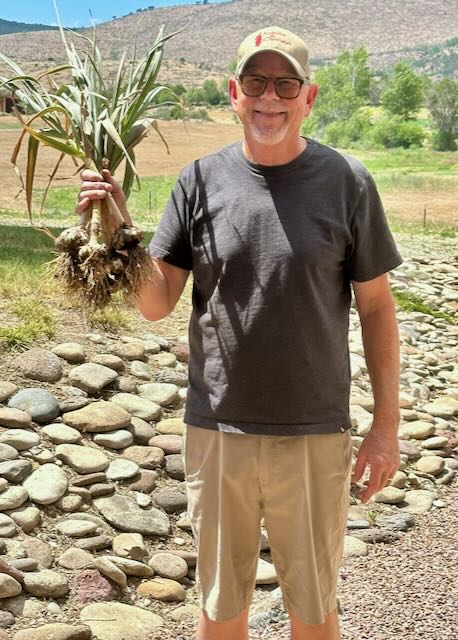
Garlic harvest, a small sampling of yours truly
New wooden end posts installed in spring - a work in progress