This is a common retort of mine—usually good for a chuckle—aimed at my wife, Janine, when she reminds me of something I absolutely must remember.
I’m usually headed out the door when I say it…
But you can’t rely on “the vault” when you’re learning and managing new experiences—especially something as complex as tending to a vineyard.
My annual vineyard “lessons learned” post is a purposeful exercise. It fills the knowledge gaps that naturally develop over time. And as you might imagine, the list grows each year. With every season come new challenges. Eventually, the sheer accumulation of a vineyard’s requirements, tasks, and surprises—combined with the goal of producing high-quality grapes for winemaking—is simply too much for one brain.
Let’s begin with the season’s successes and challenges.
2025 Season Successes
The insect-spraying program worked. The key was combining two organic sprays for the vines and treating the adjacent field with a third, much stronger compound. The field spray knocked back the grasshoppers, which had been leaf-eating, copulating nuisances for two seasons. Details—and product info—are in my 2025 mid-season blog post, A Midsummer Night’s Dream – Moisture.
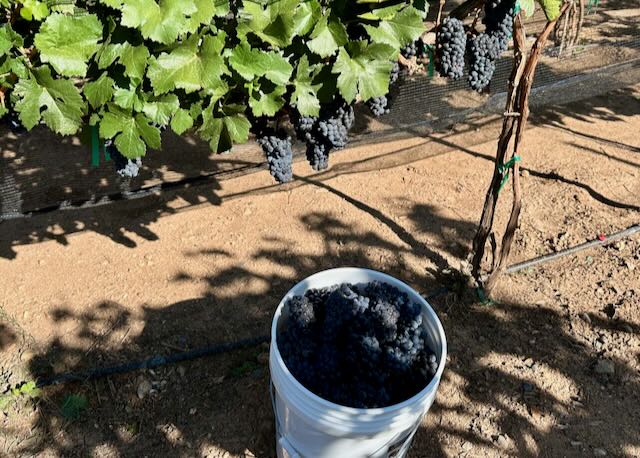
Pinot Noir mid-season
Powdery mildew (PM) was a no-show. PM came on strong late in the 2024 season. Although I was diligent in my spray program in 2025, the real hero was drought. PM thrives in cool, wet conditions; also a no-show for much of the season.
A new battery-powered backpack sprayer was a blessing. While the original hand-pump backpack kept me competitive in the right-hand arm-wrestling circuit, it is now relegated to spraying more potent stuff, like the grasshopper controller.
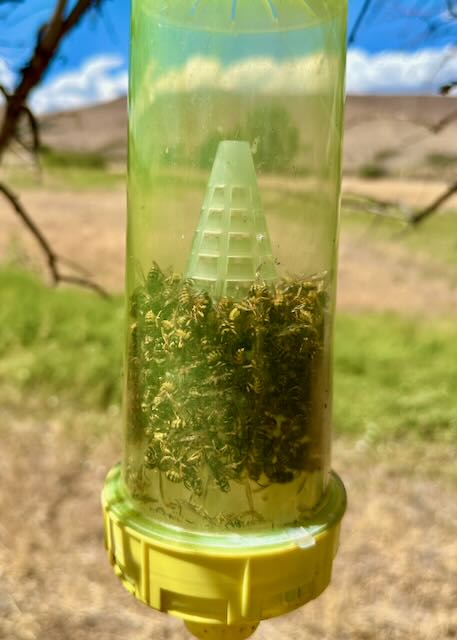
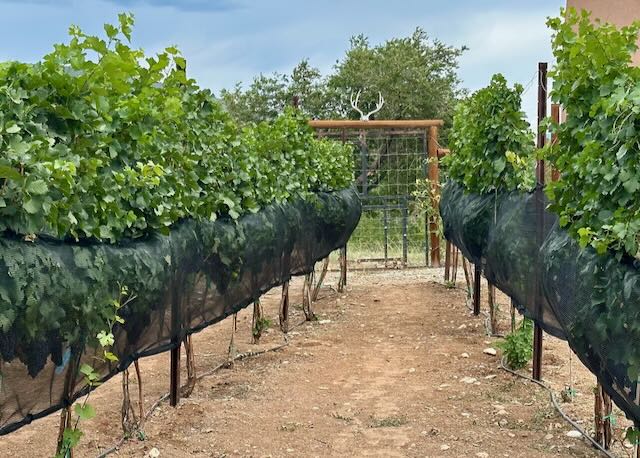
Bee netting saved the ripening fruit. Its fine weave kept insects—bees, wasps, yellow jackets—away from the grapes. After a disastrous yellow jacket season in 2023, my queen eradication program in 2024 limited the number of field workers seeking food, i.e., sugar in the grapes. While very effective, it didn’t carry over into 2025. When mid-summer brought a sudden, significant uptick in yellow jackets in the traps, I realized the netting would be a wise investment.
The Pinot Noir harvest was “over the top.” I harvested 340 pounds—more than double the previous year’s 150. Will this upward trend continue into 2026, my vineyard’s sixth season?
Nope. See “Lessons Learned” below.
2025 Vineyard Challenges
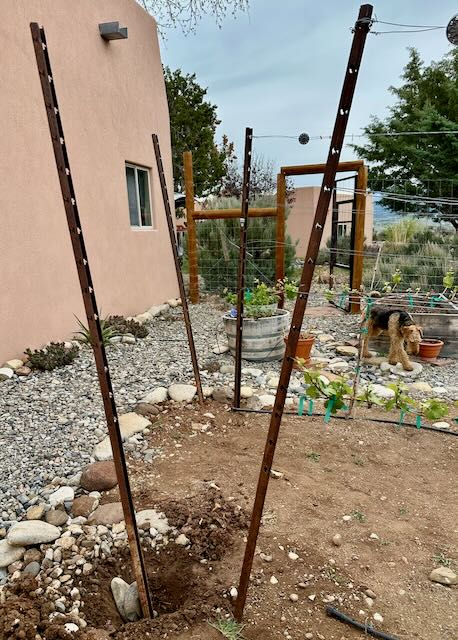
The trellis debacle continues. The original crew installed many of the metal posts too shallowly five years ago, and each season it becomes harder to keep the wires taut. This issue also made last year’s challenge list. Thinking I’d solved it, I reset half the posts in concrete early in 2025. It worked—half the time. In reality, the posts bent, or the poured concrete blocks loosened under tension. See the “Lessons Learned” section below outlining the new plan.
Setting new poles in concrete
Yellow Jacket trap after five days
Severe drought in Delta County. Although my vines are irrigated from a spring that held steady, the drought had broad negative effects: early ditch shutdowns across the valley promoted agricultural stress and wildfire risk. It was also a major driver of the return of yellow jackets.
Yellow jackets returned with a vengeance. Research taught me that drought makes them “hangry”—a perfect word for their behavior. The bee netting discouraged most, but the clever ones still found ways in. Thankfully, not enough to cause serious damage to the grapes.
Lessons Learned
As first stated in my 2024 Lessons Learned post, two “Über” principles sit at the heart of nearly everything:
Über Nummer eins:
Keep season-specific notes and, if possible, work from a written plan. The format doesn’t matter—a calendar works. As the season unfolds, add notes, track issues, and record outcomes. I use Apple Notes for each season and supplement it with my Vineyard Chronicles blog to keep me honest.
Über Nummer zwei:
Be ever watchful. There’s an old saying among vineyard managers: “The best fertilizer is the grower’s footprint in the vineyard.” Problems will grow right under your nose if you’re not vigilant. An illustration of this tenet was my belief that the previous year’s queen-eradication program, when applied annually, solved the yellow jacket issue. 2025 proved me wrong. Stay watchful—always.
Additional Lessons
Don’t cut corners on the trellis. Use the right materials and install them correctly. My original crew—overwhelmed by the rocky ground—set many posts too shallowly. I wasn’t there to supervise. To fix this in 2026, I’ll replace end posts with 8-foot, 5-inch-diameter treated wood posts, set 24 inches deep and angled in concrete. I’ll install them myself over the next two seasons.
Hopefully, you’ll read about the success of this approach in next year’s lessons learned.
Installed bee netting
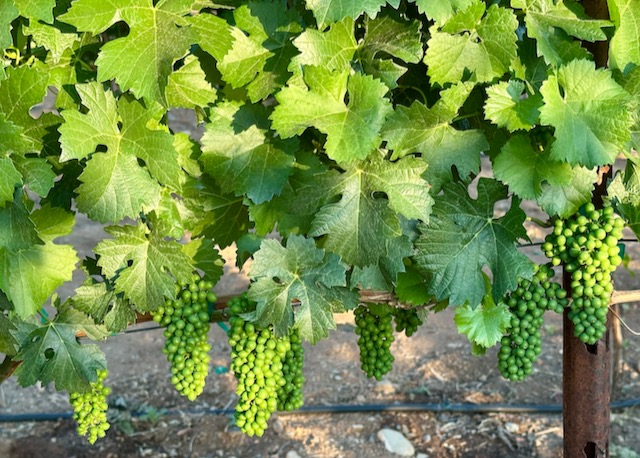
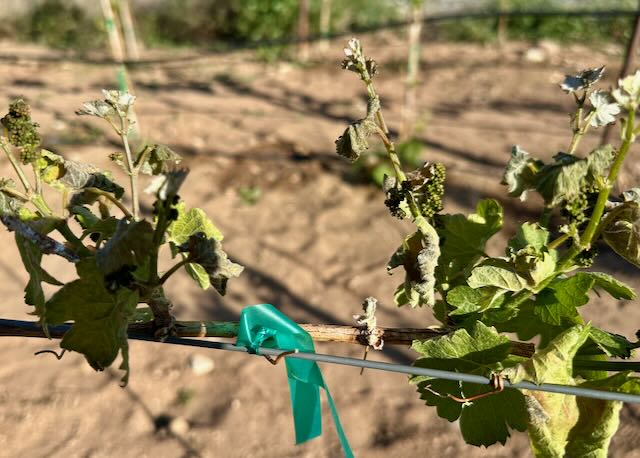
A windbreak is required along the west side of the vineyard. This was a lesson recommendation last year. It was due to high winds blowing across a large east-sloping field to the west. The consistency of high winds shattered (destroyed) many of the Riesling flower clusters as they were developing, reducing the number of grapes for the season. In 2025, the incidence of wind shatter was lower. However, on May 20, freezing temperatures swept down the field, smack into the Riesling. It was after bud break. There was a fair level of dieback along the western Riesling rows.
Pruning in 2026 must be ruthless. Two problems have developed:
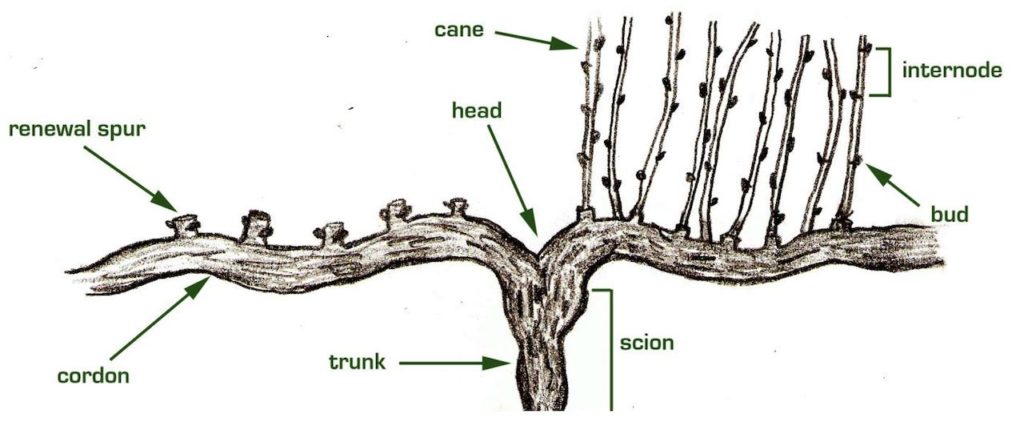
On many vines, the renewal spurs are too closely spaced (see diagram below). This leads to overcrowded canopies and grape clusters. Thinning clusters helps, but not enough. In 2026, I’ll prune spurs back to the cordons to prevent them from producing new canes.
There are spurs that grow from the underside of the cordons, forcing canes to grow at awkward angles and further crowding the canopy. While I tuck these canes into the upper trellis wires, it’s best if I remove many of them.
Given the upcoming severe pruning, I doubt I’ll beat my 2025 Pinot yield. Some younger vines yet to produce fruit may offset the reduction, but time will tell.
Ground cover would be a great addition to the vineyard floor to cool things off. The existing bare soil and rock heat up fast, stressing vines on hot days and accelerating sugar development. My Pinot Noir ripens at least two weeks earlier than vineyards elsewhere in the valley. Ground cover can help absorb some of the sun’s heat and prevent it from radiating back to the vines. It also improves soil health, and its cooling effect on hot days will lengthen fruit hang time, improving grape quality for winemaking. Traditionally, I’ve hoed the vineyard floor by hand, clearing away weeds and grass.In 2026, I’ll encourage grass as cover. Now, I’ll let the grass grow, which is likely seeded from the adjacent field. Over time, I hope it spreads.
If the grass takes, I’ll need irrigation options—likely an elevated lower trellis water line with downward-pointing sprayers along each row.
And that, my friends, requires a stable trellis…
It’s in the vault!
Riesling die back May 1 due to freezing temperatures flowing down the field to the west of the vineyard