

Shaping Wine Character - Geography or Terroir?
Which term best captures the potential of wine quality, geography or terroir?
Strip away the mystique of terroir, and what remains is simply geology.
That’s the central issue posed by the team at ENObytes.com in their post, “Viticulture at Altitude, Where Elevation Shapes Wine Character.”
For the uninitiated, terroir is the French term describing the distinctive characteristics of a wine-growing site or larger region. It encompasses soil, climate, slope, aspect, vineyard practices, and even the accumulated wisdom of generations of winemakers—factors that ultimately imprint themselves on the finished wine.
They argue that terroir can be an unreliable indicator of wine quality—especially when it’s wrapped in layers of romantic mysticism. As the article notes, terroir carries a certain romantic appeal and is often overused by both winemakers and wine enthusiasts.
I recently came across a vivid example of this romanticized view of terroir in an episode of The Drops of God, a 2023 AppleTV series.
In the show, a brother and sister compete for their inheritance. Their late father—an internationally renowned wine merchant and writer—has left behind a substantial estate, but he requires his children to complete a series of tests to determine who possesses the superior palate and wine knowledge. The winner takes everything.
In one challenge, the siblings visit an estate known for its blended wines. They are each given a blend made from eight different wines and must recreate it by judging aroma, color, and taste using eight separate component samples.
The sister struggles at first. Frustrated, she walks into the vineyard, running her hands through the vine canopies, tasting grapes, and feeling the soil. When she returns to the blending room, she instantly assembles the correct blend and submits it without further sampling. Naturally, she wins the test.
It’s a perfect example of the romantic, mystical interpretation of terroir taken to its cinematic extreme.
The ENObytes.com article also highlights the role of elevation within the broader geographic framework, noting that higher altitudes create unique growing conditions that can produce exceptional grapes.
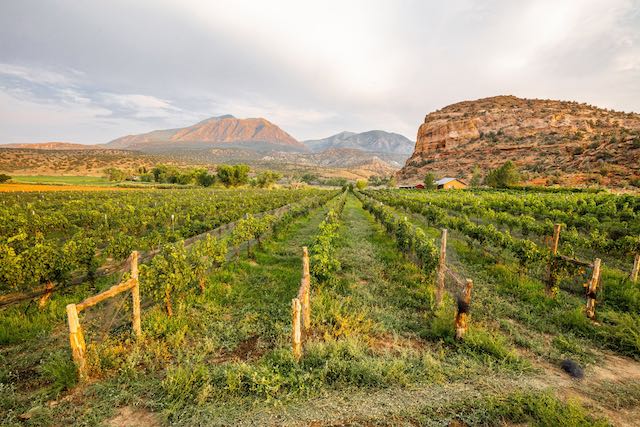
While the article offers two examples of high-altitude grape growing, I’m quite familiar with the practice myself. My vineyard—and many others in western Colorado—sits within a collection of distinctive microclimates that support grapevines at some of the highest elevations used for viticulture anywhere in the world.
Why does altitude matter, assuming supportive soil and climate?
At higher elevations, conditions favor grapes with a well-balanced sugar-to-acidity ratio. Without that balance, excessive acidity can leave a wine tart and astringent, while too much sugar without corresponding acidity can make it seem sweet or cloying.
Here’s how the process works: young grapes begin highly acidic. As they mature through warm and hot days, they accumulate sugar—a biological strategy designed to attract animals to eat the fruit and disperse the seeds. At higher elevations, nighttime temperatures drop significantly. These cooler nights slow the buildup of sugars gained during the day, allowing winemakers—if they tend their vineyards carefully and harvest at the right moment—to achieve an optimal balance of sugar and acid.
Elevation also influences the growing season. High-altitude regions typically experience fewer consistently hot days and a shorter overall season. As the ENObytes.com article explains, “grapes ripen more slowly, retain more acidity, and develop different aromatic profiles than they would at sea level. This isn’t conjecture—it’s thermodynamics.”
Now, if only higher elevations also came with fewer extreme weather events…